The Wonder-Eye (vol. 7, no. 7)

Here are a few things I’m sharing this month:
1. Question:
“What activity gave you information beyond your years as a child?” – Martin Shaw (The Wild Twin)
2. Quote:
“Sensing my difficulties, my father was blunt: if in the eyes of the world you aren’t embarrassed by your beliefs about the world then you may conclude that the wonder-eye which is in all of us hasn’t yet opened in you.” – John Moriarty (Dreamtime)
3. Poem:
The Parent’s Tao Te Ching by William Martin
Do not ask your children
to strive for extraordinary lives.
Such striving may seem admirable,
but it is the way of foolishness.
Help them instead to find the wonder
and the marvel of an ordinary life.
Show them the joy of tasting
tomatoes, apples and pears.
Show them how to cry
when pets and people die.
Show them the infinite pleasure
in the touch of a hand.
And make the ordinary come alive for them.
The extraordinary will take care of itself.
4. Something Inspiring:
The word “mu” in Zen tradition explained by Pádraig Ó Tuama:
“There’s a Buddhist concept where, if you’re asked a poor question — Robert Pirsig says that you can answer — according to his telling of the Zen tradition, you can answer with this word mu, M-U, which means, “Un-ask the question because there’s a better question to be asked.” The question that’s [being asked] is limiting, and you’ll get no good answer…[the] question fails us…I think that’s a really delightful way to understand the world. And I think questions about Jesus sometimes that are posed in our public rhetoric about Christianity — “What do we do here?” “What do we do there?” “Is this right?” “Is that right?” “Am I allowed to be gay and Christian?” for instance, was the question that plagued me for years. And I think that in a certain sense, we’re being told by God, perhaps in silence in our prayers, “Mu,” because there’s better questions to ask. And asking a wiser question might unfold us into asking even more wiser questions, whereas certain kinds of questions just entrench fear.”
5. Project updates:
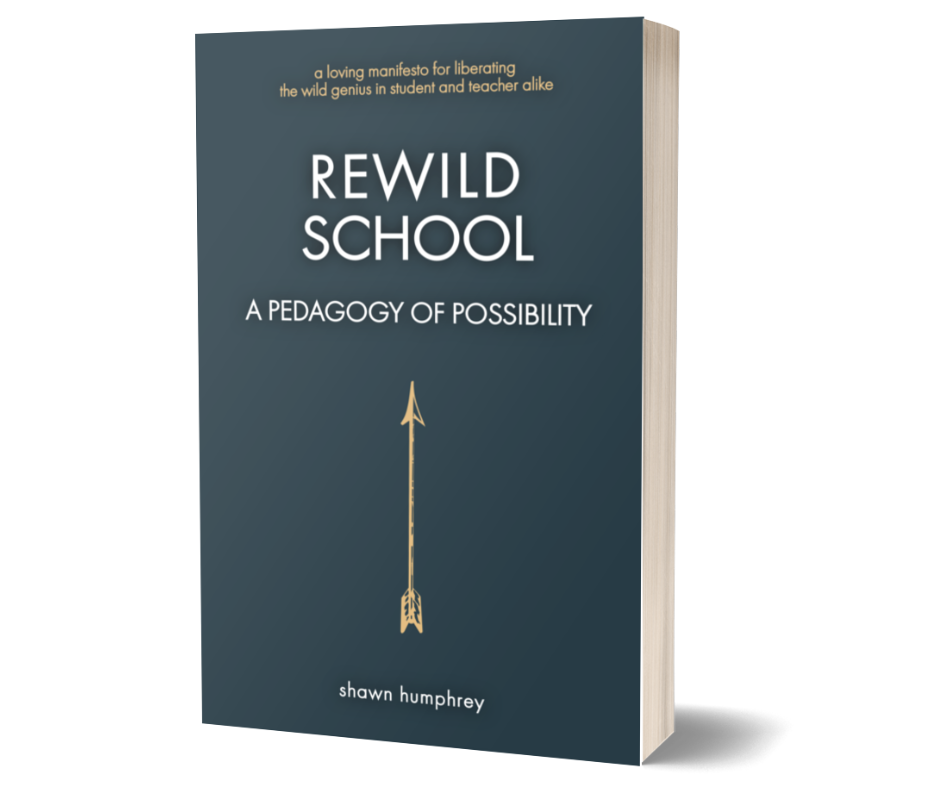
I’m slowly gathering the pieces of a new book called Manly: A Field Report. Here’s one of them:
If I were to travel across cultural boundaries, if I were to travel through time, who and how would identify the men among males? Would I look for those in power? Would I look for those with an abundance of material possessions? Would I travel to the houses of worship? The city centers? The political arenas? Or would I go to the sporting arenas? Football fields? Octagon cages? Would I go to shared festivals and cultural events? Would I look toward those who are speaking, organizing, holding the limelight? Would I go to battlefields? Into trenches and foxholes? Inside tanks and fighter jets? Would I go to the frontiers of their civilizations? Look to the wagons full of pioneers? Would I look to those who embody the dominant culture? Dress like the rest? Speak the language of the majority? Or would I look to the margins? Would I look in favelas and ghettos? Would I look among the slaves and servants of society? Those who are forced to scrub the floors and pick fruit for the wealthy? Would I look among the elders, the adults, or the young? What are the tell-tale signs of manliness? Where, in human history and experience, would I find the original model of manhood? How do I know a man when I see one? Where does true manhood come from? How do I pass it on? How do I spot a “man”? Not a male. A man. Not a warrior. Not a patriarch. But a man worthy of imitation. By role? Power? Position? Possessions? Status? Or by how he conducts himself? By a pattern of behaviors? If the latter, is there a pattern of behaviors consistently and constantly exhibited by men we consider to be “men” everywhere and everywhen? If we strip away culture, status, technology, dress, weapons, tools, fashions, what does a man do? How does he conduct himself? What pattern of behavior does a man consistently exhibit — across every culture, in every age — that makes him a man worthy of imitation?
Thanks so much. And, have a great day! – shawn